
;
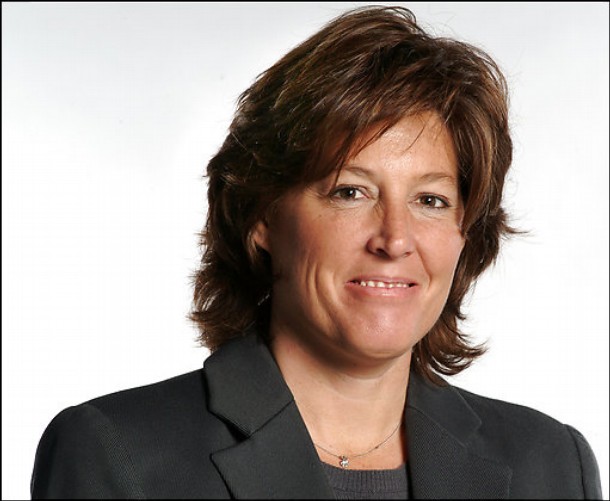
Sally Jenkins did what any embarrassed writer might do when trying to defend a really terrible story. She threw out most of the chapters and tried to refocus on one small, positive detail.
Lance is my friend.
It’s quite a bold attempt and I suspect United States Anti-Doping Agency boss Travis Tygart is having a pretty good laugh. There’s a certain horse with blinders, eyes closed, ears plugged, “nah-nah-nah, can’t hear you” quality to her attempted escape.
For Jenkins, the new revised Lance story has nothing to do with the rules that he broke, or the doping program he enforced or the nasty tactics he used to destroy people who spoke the truth or the countless people he mislead and abused. Jenkins doesn’t care about the colossal damage he has now done to the sport as it tries to survive the worst doping scandal in history.
Sally is not angry with Lance because they’re friends. Gosh, that’s wonderful.
No, these are not damning issues for Sally because they don’t exist for her and therefore there’s no reason for anger. Isn’t that great — simply lower head into sand! As she makes clear right from the start, she side-steps this horrific mess with one reductionist move. Lance is her friend, she admires his feisty competitive nature and his inspirational work fighting cancer — never mind the “most sophisticated, professionalized and successful doping program that sport has ever seen.”
So all that other stuff — the cheating, the lying, the bullying, the intimidation, the cover-ups, the character assassination, the cynical manipulation, the ego and avarice, the entitlement — Jenkins doesn’t judge that. It’s an amazing Get-Out-Of-Judgement Card.
She’s not angry because she is not judging Armstrong on any measure that would make her angry. She has successfully narrowed her focus to allow her to go on loving. Lance is my friend. That’s pretty much her reaction and defense when the rest of the world is terribly sad or seriously outraged. Armstrong has lost his seven Tour de France titles, all of his high profile sponsors, his name has been erased from buildings and a US race series, he’s been burned in effigy in England and owes a lot of people money.
But Lance hasn’t lost everything. No, he still has his loyal biographer Sally. She’s not gullible, she’s defiantly blind.
Jenkins’ response is largely the same one Armstrong himself gave on twitter after the USDA bomb detonated and his sports legend blew up in a matter of weeks. He pronounced himself “unaffected.” Jenkins is also untouched by pro cycling’s biggest fraud – even thought it was a myth she played a significant role in creating with her two ghostwriter books with Armstrong. The man Sports Illustrated recently named the “anti-sportsman of the year” is still a pal despite everything.
Jenkins takes the personal route because it allows her to ignore virtually every damaging thing Armstrong has done and simply write it off. This friendship isn’t based on facts or testimony or affidavits or the assessment of his fellow teammates, USADA, the UCI or the Tour de France or cycling fans. Hey, we’re friends, nothing else matters.
By golly she just likes this Lance Armstrong guy and his can-drug — sorry, can-do — attitude and his plucky mom who by the way had no choices either. Jenkins is generous with employer excuses and oh-so understanding and we’ll bet she’s got a free Trek Madrone in her garage.
After her myopic”friends” defense, Jenkins moves to the usual failsafe litany that Armstrong apologists have used for ages. Raised a lot of money for cancer, cheating really doesn’t matter, everybody did it, happening 10 years ago, etc etc. That’s all expected and she can mark the boxes on her Lance Fan To The Death Checklist.
But then, Jenkins does something truly bizarre. As part of her Armstrong defense, she makes this head-snapping statement: “I’ve long believed that what athletes put in their bodies should be a matter of personal conscience, not police actions — when we demand unhealthy, even death-defying extremes of them for our entertainment, it seems the height of hypocrisy to then dictate what’s good for them.”
Ahh, okay … it’s not only our fault, we’re hypocrites. Poor suffering Lance.
I think her statement is so staggering and witless and cynical and strange that my mind goes into shock. I become so angry that can’t even gather my arguments in any thoughtful way. So before I attempt a rational response, let me go apeshit. Yeah, and is it unreasonable that we “demand” integrity and honesty from a journalist from a newspaper with the high reputation of the Washington Post?
It’s one thing to judge Armstrong against a extremely narrow set of criteria — he’s my friend, I don’t care what he did. It’s another thing to minimize doping as personal conscience — and then excuse it by blaming the Tour de France for being a hard stage race and cycling fans for demanding athletes dope for their own amusement.
This is one of those moments when you re-read her quotes several more times, thinking, is she serious, is she so desperate to salvage her own professional reputation that she’ll say anything no matter how outlandish and flat-out stupid?
I have to say, yes.
First, Jenkins attempts damage control by making this about Lance’s personal conscience. Not the people he cheated, not the teammates he threatened, not the competitors he robbed, not the sport he ultimately damaged. There’s no argument that there was an entire doping culture but as the USADA Reasoned Decision made quite clear, Lance wasn’t a victim, he was a ringleader. Jenkins presents his decision in a vacuum, in isolation, without any wider implication.The effects of Armstrong’s decision to dope were anything but personal.
Superstar athletes are incredibly influential role models for younger athletes and Armstrong was the biggest hero of them all. It’s not unintentional that the subtitle of Tyler Hamilton’s The Secret Race mentions “winning at all costs.” What does running a doping program for that many years tell young athletes? What does that win at all costs mentality encourage in young riders who want to be successful?
Jenkins is a career sportswriter who seems to imply that integrity and honesty and playing by the rules in sport don’t ultimately matter too much. Well, they matter to the millions who bought the two books and the Myth but now that the fairytale is fake, Jenkins sees the aftermath as largely inconsequential.
On the subject of Jenkins’ claim that cycling fans demand riders dope in order to perform inhuman feats for their viewing entertainment, well, I don’t think that even requires a response. Even a good sportswriter will find that a difficult story to sell.
I don’t want to be Sally Jenkins’ friend.
While I may be a cycling blogger with nowhere near the journalistic resume as Jenkins, I firmly believe she has lost all credibility as a sportswriter and is an embarrassment to her profession.

Doping “boils down to using medications without a prescription”. That is an incredible statement. I am sure The Washington Post must be proud of having such a monumental intellectual in their midst.
Jorge, I don’t know what the Washington Post is thinking. They’re just letting her spout nonsense. Matt
Well said…
Thanks Mr. Poobah man. Matt
I think my favorite comment was…”Gosh, that’s wonderful.” Haha.
You are right to go apeshit on this article. Total disgrace! I was going crazy as I read it. Unbelievable!
You knew that Bruyneel would stick with Lance to the final bitter end but Jenkins? That was a surprise and pretty revealing about where she stands. Matt
Sally Jenkins has managed to prove by her own words that she is an idjit. She had zero credibility now.
Mark, have to agree. Really can’t fathom some of her statements. Matt
Hear hear!
Yeah, yeah! Matt
[…] but I don’t have the intellectual ability to do it anywhere nearly as good as the following. One is here at A Twisted Spoke. This pretty much sums up just about everything I was thinking as I was reading the original […]
What’s unrolling now has been quite obvious for years if you did know what to look at. If LA was such an extra ordinary talent why did he quit right after the Tour almost every year? Why not ride on till the end of the season. This always bothered me somehow. And that heartbreaking cadence he was spinning. Try to go at 110 RPM for a while even in easy gears and see how it feels. But I disagree that he destroyed the sport. He made the sport. The sport was already destroyed by all sketchy Belgians and Italians. He made it global and brought the big money into it. W/o him I seriously doubt cycling would ever get as big as it is now. Especially in US and outside Europe.
Bo, no argument on Armstrong being the guy that made the world take notice of bike racing. No matter what, he’s the biggest personality that pro cycling will ever have. So he built it up and then he tore a large chunk of it down. It’s just the nature of being a superstar — you get all the credit and all the blame. But ultimately I believe his actions have and continue to have terrible effects on the entire sport. It’s going to take years to get back to something resembling normal. A real shame on many levels. Matt
Thank you for this; it was beautiful! I too felt shocked, insane reading Jenkins piece. John McEnroe’s infamous outburst, “you canNOT be serious,” has been ringing in my ears. How can a writer so patently compromised and absurd keep a job?! How is it possible that her ludicrous piece gets printed? Rob Parker, who recently attacked Redskins’ Robert Griffin III for being a “cornball brother,” seemed unbelievably stupid to make such comments. Jenkins has taken to new heights and it is dispiriting to behold. Again, thank you.
Julian, we do what we can here at Twisted Spoke. I think Jenkins decided she had two choices: admit she was lied to by Lance and gullible and apologize top readers or take the defiant route and say whatever she could to justify the position. Well, when you get desperate you say a lot of stupid things. Matt
Yes! Great response. Thank you. The issue I find interesting is a sort of American knee-jerk to circle the wagons around a villain. So many times have I voiced the same disgusted perspective on lance and his apologists; only to be met with these hyper-defensive “I’ve read all of his books” (cancer etc) fans that regurgitate this shocking perspective on doping. I have had heard countless Lance fans refer to the use PED by elite or non-elite athletes an issue of personal liberty!!! WTF!. The lack of moral compass and consideration to those clean athletes who’s legacies were stolen…that is what continues to stubn me. The “everyone does it.”..its personal liberty etc. has come up so frequently that I wonder of there isnt some sort of super secret hypnosis going on in the text of his biography.
and no Lance did not make the sport. The sport in Europe was fine without him…and Greg Lemond had inspiration and talent and a passion for cycling in America – all in spades. the best outcome for me personally would be a movie about Greg Lemond…to introduce to the american public – a once in a lifetime cycling talent that was pulverized into obscurity by a fraud.
I “have no dog in this fight”. What I find somewhat ironic, is that it seems the majority have lost sight of one fact; EVERY SINGLE PROFESSIONAL RIDER IN THE PRO PELOTON HAS BEEN ON SOME FORM OF PHARMACEUTICAL ASSISTANCE AT LEAST ONCE IN THEIR PRO CAREER. And don’t get started on professional football, soccer, NBA, MLB, track, etc. etc. Is Lance guilty; you bet! And so is virtually everyone else……. Until society stops “worshipping” athletes at such extreme levels, the issues that have existed since the 50’s (back then it was mostly amphetamines, and the early days of anabolic steroids) will continue indefinitely.
We live in a celebrity culture and that is certainly one of the problems. Plus people prefer an amazing story to the hard truth — the Lance Myth. Matt
I think that Sally Jenkins brings up some really good points in her article that makes most cycling fans uncomfortable. The only problem is that she makes some completely terrible points too so its easy to write it all off as BS.
Robert, honestly, I find it hard to think Jenkins was ever a talented sportswriter after her lame and stupid defense of Lance. Matt
“Embrace the anger, Sally, not the lies”
by David Walsh
16 December 2012
The Sunday Times (UK)
Great quote, hadn’t seen that one. Sally, a Lance trooper to the bitter end. Matt